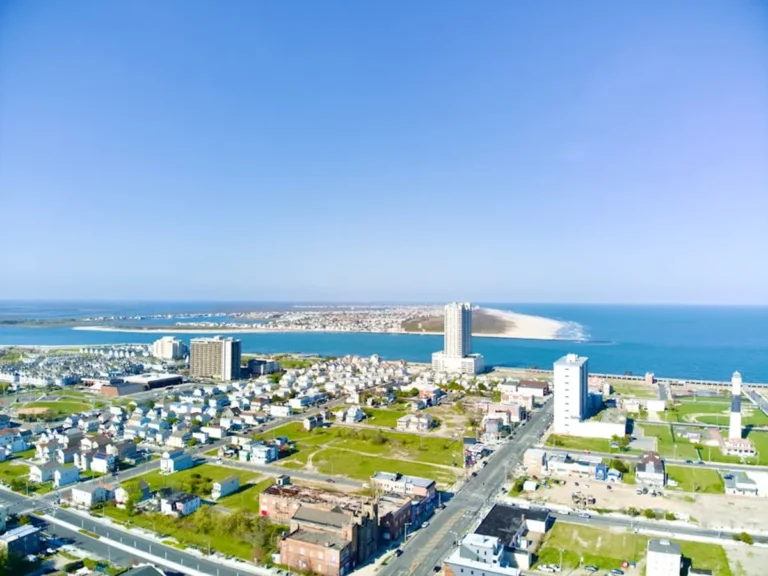
The contemporary year-round population of Atlantic City is approximately thirty-eight thousand. The number has fluctuated across recent decades within a range that has trended modestly downward from the mid-twentieth-century peak but that has remained relatively stable through the post-2014 period. The demographic composition, residential patterns, and community continuity of that population are substantially different from what the visitor-focused narrative of the city would suggest, and understanding the year-round population is fundamental to understanding what the city actually is.
This piece reviews who lives in Atlantic City, where they live, what their economic and social circumstances are, and what the community continuity across multiple generations has meant for the contemporary city. The population data come from census and other public sources. The community-level observations come from years of journalism within the year-round community.
The demographic composition
Atlantic City's year-round population is one of the most demographically diverse populations in New Jersey, with substantial representation across multiple racial and ethnic categories and substantial diversity within those categories as well. The recent census data show approximately fifty percent African-American population, approximately twenty-five to thirty percent Hispanic population (with substantial Puerto Rican, Mexican, and Central American components), approximately ten to fifteen percent White non-Hispanic population, and approximately ten to fifteen percent Asian-American population (with substantial Vietnamese, Indian, and Filipino components). The composition has shifted across decades, with Hispanic and Asian-American populations growing across recent decades while the White non-Hispanic population has declined as a share.
The age distribution shows a population that is somewhat younger than the New Jersey state average, with substantial under-eighteen population and substantial working-age population, and a smaller proportion of the population above sixty-five than the state average. The household composition includes substantial numbers of multi-generational households, single-parent households, and the various household configurations that reflect the broader demographic patterns.
The economic circumstances of the year-round population include substantial range, with median household income lower than the New Jersey state average, substantial poverty rates concentrated in specific neighborhoods, and a working-class economic profile that reflects the labor-market structure of the regional economy. The income distribution includes meaningful middle-income population in stable employment in the casino industry, regional health care, and the broader service economy, alongside the lower-income population that has been more directly affected by the post-2014 economic adjustments.
The neighborhoods and where people live
Atlantic City's residential geography is organized into several distinct neighborhoods with different demographic, economic, and physical characteristics. The neighborhoods include Ducktown (the historical Italian-American neighborhood west of the casino district), the Inlet (the northernmost neighborhood at the inlet end of the city), Chelsea (the southern neighborhood south of the casino district), Lower Chelsea (further south, with somewhat different demographic and physical character), Bungalow Park, Westside, Marina District (proximate to the casino marina and the related infrastructure), and several smaller neighborhoods with their own specific identities.
The housing stock varies substantially across the neighborhoods. The historical row-house stock dating to the early twentieth century anchors several neighborhoods, with subsequent rebuildings and modifications across the decades. The mid-century apartment buildings of various scales constitute a substantial portion of the housing stock in some areas. The post-1980 affordable-housing construction associated with the CRDA programs provides another substantial component of the housing inventory. The single-family detached housing, more concentrated in some neighborhoods than others, completes the principal housing categories.
The residential patterns include substantial multi-generational continuity in some neighborhoods and substantial newer-resident populations in others. Ducktown, for example, includes families that have lived in the neighborhood for four or five generations alongside more-recent residents who have moved into the neighborhood across recent decades. The Inlet has experienced more substantial demographic turnover across the casino-era redevelopment but retains substantial multi-generational continuity in specific blocks. The Westside has its own distinct residential history and continuity patterns.
The community institutions
The community institutions that support the year-round population include schools, religious institutions, community organizations, and the various civic infrastructure that the city's history has produced. The Atlantic City public schools serve the bulk of the year-round school-age population, with substantial enrollment, multiple school facilities across the elementary, middle, and high school levels, and the various supporting programs that the school district administers. The schools have faced substantial fiscal and operational challenges across the post-2014 period but have continued to operate as the principal educational infrastructure for the year-round community.
The religious institutions include substantial concentrations of Catholic parishes (with the historical Italian-American and Hispanic parishes both substantial in number and active), Protestant congregations (with both predominantly African-American congregations and other denominational congregations active), Jewish congregations (with both Orthodox and other denominational presence), and Muslim congregations (with multiple mosques serving the Muslim population). Several Buddhist and Hindu institutions serve specific Asian-American populations. The religious institutions function as community infrastructure beyond their religious roles, hosting community events, providing social services, and supporting the broader community life.
The community organizations include neighborhood associations, ethnic and cultural organizations, social-service organizations, and the various fraternal and civic organizations that have operated across decades. The organizational infrastructure has been resilient across the city's economic transitions, though specific organizations have come and gone and the resource bases for different organizations have varied across periods.
The economic circumstances
The economic circumstances of the year-round population reflect the broader regional and national economic context, with specific features that the casino-era and post-casino-era dynamics have produced. The casino industry continues to be the largest single employer for the year-round population, with employment in casino-floor positions, hotel and restaurant operations, maintenance, and various administrative roles. The post-2014 stabilization at reduced employment levels has produced a workforce that is smaller than the casino-era peak but more stably employed than the immediately-pre-2014 workforce.
The regional health-care sector provides substantial employment for the year-round population, with AtlantiCare and various smaller institutions employing substantial workforces in clinical, administrative, and support roles. The educational sector, including the public schools, Stockton University in nearby Galloway Township, and various community-college and other institutions, provides additional employment.
The retail, restaurant, and small-business sectors provide employment that is more variable in stability and compensation but that constitutes a meaningful portion of the year-round employment. The seasonal-summer employment during the summer visitor peak provides additional income for many households that combine year-round and seasonal employment to support household economics.
The unemployment and underemployment rates for the year-round population have been higher than the New Jersey state averages across most of the post-2014 period, with concentration in specific neighborhoods and demographic groups. The poverty rates, similarly, are higher than state averages and concentrated in specific areas. The economic circumstances have been a continuing focus of community-development work and of regional political attention.
The community continuity
The community continuity across multiple generations is one of the most-distinctive features of the year-round population. Many residents are second, third, fourth, or fifth-generation Atlantic City residents whose families have been in the city across the casino-era boom, the mid-century decline, and earlier periods of the city's history. The continuity produces social networks, institutional memory, and community-level relationships that are deeper than the visitor-focused narrative would suggest.
The continuity has been challenged across decades by economic pressures that have caused some residents to leave the city for other areas. The continuity has also been refreshed by in-migration of new residents, including substantial Hispanic and Asian-American immigration across recent decades that has added new layers to the multi-generational community life. The combination of long-tenured continuity and ongoing in-migration produces a community that is structurally different from communities that experience either rapid turnover or pure continuity.
The community continuity is reflected in the social institutions, the family networks, and the everyday community life that the year-round residents experience. The children of long-tenured residents attend school with the children of more-recent residents. The community organizations include both long-tenured leadership and newer participation. The religious institutions include both long-established congregations and newer congregations serving newer demographic populations.
The relationship to the visitor economy
The relationship between the year-round population and the visitor economy has been complicated across the city's history and continues to be complicated. The visitor economy is the largest economic sector and provides substantial employment to the year-round population, but the visitor economy also operates with rhythms and priorities that do not always align with the year-round community's circumstances and needs.
The casino-era construction and redevelopment displaced substantial portions of the year-round community, particularly in the Inlet and in certain blocks of Ducktown. The displacement has been a continuing source of grievance and political attention across decades. The replacement housing that was provided through the CRDA framework has partially addressed the displacement effects but has not fully replaced the community-level continuity that the displacement disrupted.
The visitor-economy resources continue to fund the public services that the year-round community depends on, with the casino-related tax base providing a substantial share of the city's general fund. The relationship is therefore both a source of community vulnerability — when the casino tax base contracts, the public services contract — and a source of community resilience — when the casino industry stabilizes, the public services have a more secure basis.
What the year-round community is in the contemporary period
The contemporary year-round community in Atlantic City is a community that has absorbed substantial economic and demographic change across decades and that continues to operate with the social institutions, family networks, and everyday community life that the multi-generational continuity has produced. The community is smaller than the casino-era peak in some respects and larger in others. The demographic composition is more diverse than at any earlier period in the city's history. The economic circumstances are more constrained than during the casino-era peak but more stable than during the immediate post-2014 contraction.
The community will continue to be the foundation of what Atlantic City actually is across whatever future the city develops. The visitor economy comes and goes with the regional and national economic conditions, the casino industry adjusts and readjusts to the broader market, the political and governmental arrangements shift across administrations and legislative sessions. The year-round community persists across all of these changes, adapts to them, and continues to do the everyday work of living in the city, raising families, working at the available jobs, attending the religious and community institutions, and continuing the multi-generational continuity that has been the city's deeper identity throughout.
The community in February — the city as it operates in the off-season, with the visitor traffic substantially reduced and the year-round life proceeding in its routine patterns — is the city that visitors do not see and that the marketing copy does not describe. It is, however, the city. The visitor economy is layered on top of the year-round community. The community is the foundation. Understanding the community is part of understanding the city, and the year-round community deserves the attention that the structural-foundation role warrants.