Most visitor guides to Atlantic City are organized around the casino properties and the seasonal entertainment offerings that the visitor economy has been designed to provide. The visitor experience that those guides describe is real, is what most visitors come for, and is what the local tourism infrastructure has been built to support. The visit they describe is also a particular kind of visit that does not engage with most of what Atlantic City actually is.
This piece is a different kind of guide. It describes what someone who lives in Atlantic City year-round would suggest to a visitor who wanted to engage with the city as a place rather than as a casino-resort destination. It is not a comprehensive guide and is not intended to replace the standard tourism resources for visitors who are coming primarily for the casino-resort experience. It is a complementary guide for visitors who have some interest in the city itself and who want their visit to engage with what the city has to offer beyond the casino-floor environment.
The Boardwalk as walking infrastructure
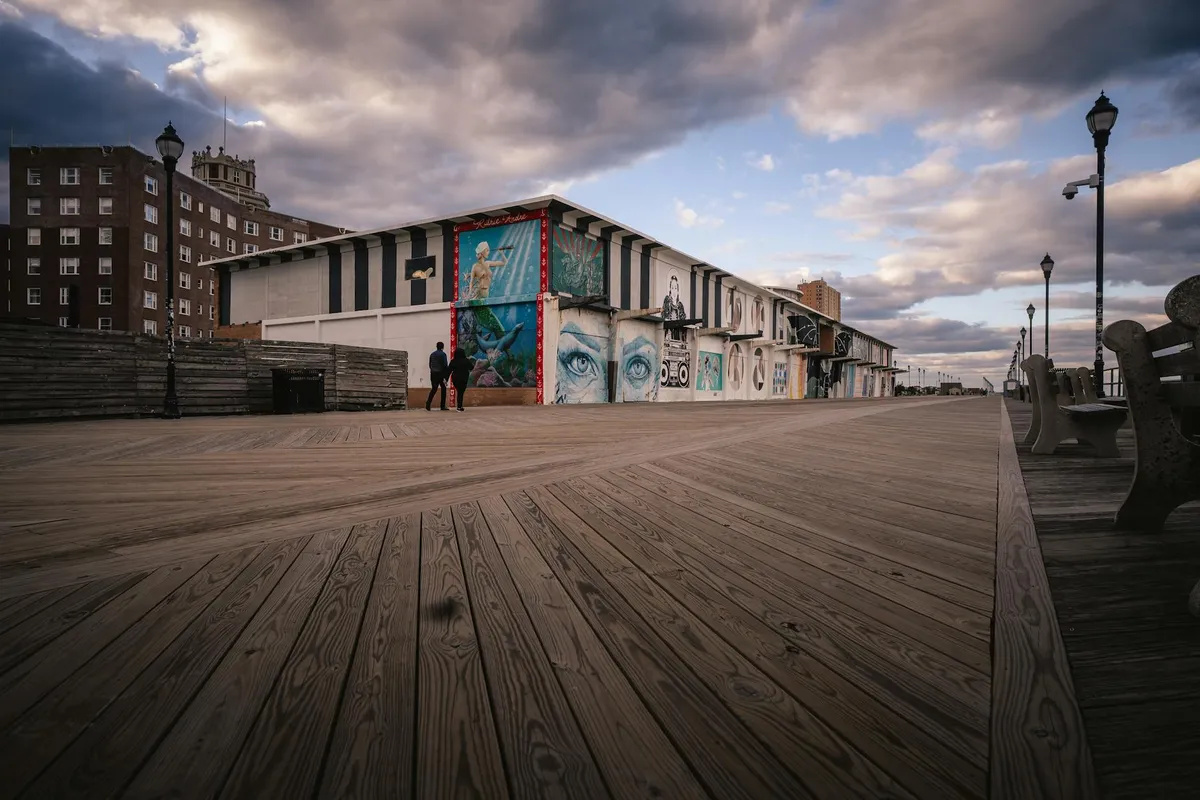
The Boardwalk is the most-visible piece of Atlantic City's public realm and is worth substantial walking time for any visitor who has the inclination. The Boardwalk runs approximately four miles along the city's ocean edge, with the active casino and commercial districts concentrated in the central sections and quieter residential-adjacent sections at the northern and southern ends.
The morning walk along the Boardwalk, particularly in the off-season but also early in summer mornings before the daytime traffic builds, is one of the better experiential opportunities the city offers. The pace is unhurried. The architectural record of the Boardwalk's frontage is visible at walking speed in ways that the daytime crowds obscure. The relationship between the city and the ocean is more legible when the surrounding density is reduced.
The southern Boardwalk, beyond the casino district, transitions into the Chelsea neighborhood's residential and small-commercial frontage. The walk continues along the same wooden infrastructure but with very different surrounding context, and the contrast is informative about the city's spatial structure. The northern Boardwalk, beyond the Steel Pier and toward the Inlet, has its own different character and is worth equivalent attention.
The neighborhoods to walk through
The neighborhoods west of the Boardwalk are where most of the year-round community lives and are worth walking through with attention to how the residential fabric varies across blocks. Ducktown, the historical Italian-American neighborhood, has the rowhouse density and the small-scale commercial fabric that defined the early-twentieth-century city. The buildings, the streets, and the small-business presence reward careful walking.
The Chelsea neighborhood, south of the casino district, has its own residential character with a different building-stock mix and different demographic composition. The residential streets have substantial architectural variety across the housing stock and substantial multi-generational community presence. The walking experience is different from Ducktown but equivalently rewarding.
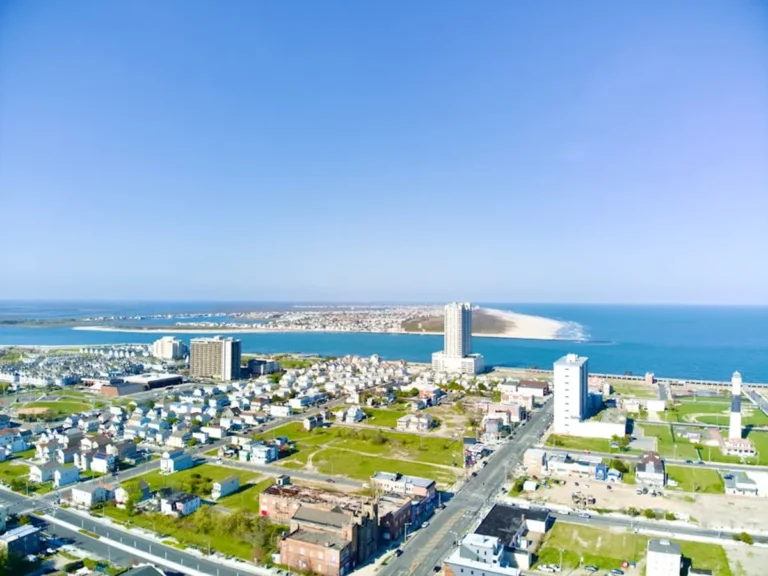
The Inlet, at the northern tip, has the redevelopment-shaped contemporary fabric described in the longer Inlet history elsewhere on this site. The walking experience there involves more discontinuity between blocks but also more historical layering visible in the surviving fabric. The waterfront at the inlet itself is worth standing at, with the working channel visible and the regional geography legible.
The Westside, west of the principal residential district, has its own character and is worth walking through if the time and inclination are available. The residential pattern, the community institutions, and the everyday life of the neighborhood are different from the closer-in neighborhoods and provide additional context for understanding the city's spatial and social structure.
The eating that is worth doing
The eating recommendations for visitors who want to engage with the year-round community's eating-out infrastructure include several specific establishments that have been described in the longer year-round-restaurant piece elsewhere on this site. The Ducktown Italian-American restaurants, the long-tenured diners across the city, several specific seafood establishments that operate year-round, and selected newer establishments that have established themselves in the year-round market are the principal recommendations.
The casino-property restaurants are not principally recommended for the kind of visit this guide describes. They serve the casino-resort customer base and produce a different eating experience than the year-round community establishments. They are not bad in any general sense — several casino-property restaurants are operationally and culinarily strong — but they do not provide the engagement with the year-round community context that this kind of visit is oriented toward.
The year-round community establishments operate on year-round operating hours that are different from the casino-property hours, with most closing earlier in the evening than the casino-resort customer base would expect. Lunch and early-dinner timing is generally easier than late-evening timing for engaging with the year-round establishments. The pacing of the meals is also generally different — less rushed than the casino-property pacing, with longer kitchen times and more time at the table.
The historical context to engage with
The historical context that informs everything else about the city is worth engaging with, either through reading or through visits to specific historical resources. The Atlantic City Historical Museum operates in the Garden Pier and provides a substantial overview of the city's history through its collections and exhibitions. The historical context they present is complementary to what the rest of this site provides and is worth at least an hour of attention for any visitor with the inclination.
The architectural history that the Boardwalk and the surrounding neighborhoods provide is also engageable through walking attention to the buildings and through reading either before or after the visit. The buildings that survive from the early-twentieth-century period are documented in the historical record and can be identified during the walking visits. The casino-era buildings that have been added to the architectural fabric since 1976 are equally documented and equally informative for understanding what the city is now.
The broader regional history — the relationship to Philadelphia, the South Jersey context, the barrier-island geography — is also worth engaging with as background. The visit to Atlantic City makes more sense, and engages with more of what is actually available, when the regional context is partly understood.
What to do in the off-season
The off-season visit, between Labor Day and Memorial Day, is a substantively different experience from the summer-season visit and is in many ways the more-rewarding visit for the kind of engagement this guide describes. The visitor traffic is reduced, the year-round community is more visible, and the pace of the city is closer to the everyday year-round pace than the summer-amplified pace.
The off-season offers substantial walking and visiting opportunities with reduced crowding and reduced operating-hours pressure. The year-round restaurants are often less busy and more conducive to longer meals and conversation with the staff. The Boardwalk is more contemplative without the summer crowds. The neighborhoods are quieter and more legible.
The off-season weather is variable and includes substantial cold and substantial precipitation. Adequate clothing for coastal cold weather is necessary, and the outdoor walking time should be calibrated to the conditions of the specific visit dates. The off-season visit rewards visitors who are willing to engage with the actual weather rather than expecting a moderated environment.
What to skip
This is not a guide to what to do everywhere. It is a guide to what to do that engages with what the city actually is. Several activities and experiences that the standard tourism guidance describes are appropriate to skip for the kind of visit this guide describes.
The casino floors themselves can be skipped if the visit is oriented toward the city as a place rather than the casino-resort experience. The casino-property amenities — the resort restaurants, the entertainment offerings, the various retail and service offerings within the casino properties — can similarly be skipped or engaged with selectively without changing the substantive character of the visit.
The seasonal entertainment offerings that the summer-visitor economy provides are also generally appropriate to skip. They are real and are what they are, but they do not engage with the year-round community context and they are not the most-rewarding way to spend time in the city.
Various tourist-oriented activities and venues that the standard guidance highlights are similarly appropriate to skip. The visits that engage with what the city actually is are visits that engage with the public realm, the year-round community establishments, the historical context, and the geographic and architectural reality of the place.
The basic logistics
The basic logistics for the kind of visit this guide describes include accommodation, transportation, and pacing. The accommodation can be in casino-property hotels (which are operationally fine for accommodation purposes regardless of the broader engagement with the casino-resort context) or in the smaller hotels and bed-and-breakfast establishments that operate in the city and in the surrounding shore communities. The smaller accommodations often produce a more contextual visitor experience and are recommended where the budget and availability allow.
The transportation options include automobile (which most visitors use, particularly for visitors from the Philadelphia and broader regional area), the NJ Transit Atlantic City Line rail service from Philadelphia, and limited bus service from various regional origin points. The automobile provides the most flexibility for engaging with the surrounding shore communities (Margate, Brigantine, Ventnor) but requires parking management within the city. The rail service is appropriate for visitors who do not need vehicle mobility within the city and who can manage their visit within walking and limited-transit reach.
The pacing for a substantive visit is at least two days and ideally three or more days. A single day in the city is enough for a focused visit oriented around specific destinations but is not enough to engage with the city as a place in any substantive way. Three days allows substantial walking time, multiple meals at year-round establishments, time at the historical resources, and time for the unstructured contemplation that the city rewards.
Why this kind of visit is worth doing
Atlantic City is a city with substantial layered history, with a year-round community that has substantial multi-generational continuity, with a public realm that includes one of the most-recognizable pieces of public infrastructure in the United States, and with a regional context that connects it to the broader Delaware Valley and to the larger questions of American urban history. The standard casino-resort visit does not engage with any of this. The kind of visit this guide describes does.
The visit is not for everyone. Visitors who are coming primarily for the casino-resort experience can engage with that experience through the standard tourism infrastructure and will not benefit from the kind of guidance this piece provides. Visitors who have some interest in the city itself, who want their visit to engage with what the city actually is, and who are willing to do the walking, the reading, and the unstructured contemplation that the engagement requires will find the city substantively rewarding in ways that the casino-resort experience alone does not provide.
The city deserves the careful attention that this kind of visit requires. The year-round community deserves to be seen rather than skipped past. The historical and architectural context deserves the reading and the walking that engaging with it requires. The visit that does this work is the visit that the city makes most sense for, and the visit that produces the kind of memory that the casino-resort experience does not produce. The city has been here for a hundred and fifty years. It will reward the visitor who engages with it on those terms.